Home / Blog / Matcha processing
Why Matcha Is Grown in the Dark Before It's Ever Ground
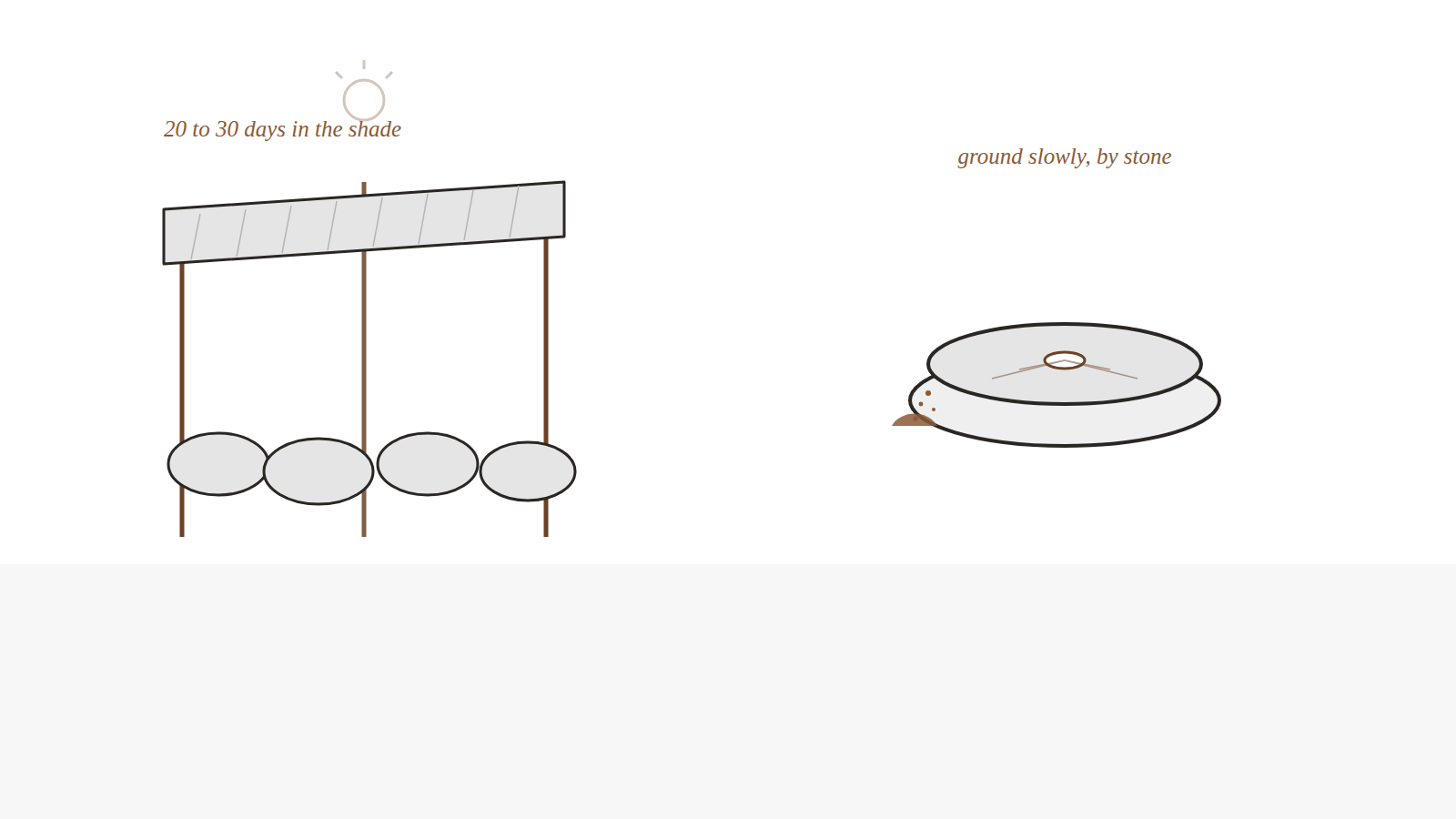
It's easy to think of matcha as simply green tea, ground finer. It isn't. Matcha starts diverging from ordinary green tea weeks before harvest, and every step after that, how the leaf is steamed, dried and finally ground, is shaped around protecting the specific qualities that divergence creates. Grinding is the last step, not the defining one.
Grown in the dark on purpose
Around 20 to 30 days before harvest, farmers cover the bushes destined for matcha with shading structures that block roughly 85 to 90 percent of direct sunlight. Deprived of light, the plant responds by ramping up chlorophyll production, which is largely why matcha has such a vivid, saturated green compared to unshaded green teas. The more consequential change is chemical rather than visual: under normal sunlight, the amino acid L-theanine gradually converts into catechins, the compounds responsible for tea's bitterness and astringency. Shading slows that conversion substantially, so shaded leaf retains far more L-theanine relative to catechins than leaf grown in full sun, which is the main reason matcha tastes rounder and more savoury (closer to umami than bitter) than a typical steeped green tea.
Tencha: steamed, not rolled
The shaded leaf, once picked, becomes tencha, the specific leaf material matcha is ground from. Like most Japanese green teas, tencha is steamed almost immediately after picking, which halts oxidation and locks in that bright green colour. Where it diverges from a tea like sencha is the next step: sencha is rolled into its familiar tight, needle-like shape as it dries, while tencha is dried flat and left unrolled. The stems and veins are then removed, leaving only flat leaf fragments, called tencha proper, ready for grinding. Skipping the rolling step matters because rolling bruises the leaf and accelerates certain flavour changes that tencha production is specifically trying to avoid.
Ground by stone, slowly
Traditional matcha is ground on granite stone mills called ishiusu: two circular stones, carved with shallow grooves, rotating against each other at roughly 50 to 60 revolutions per minute while tencha is fed through a hole in the top stone. The grooves shear the leaf into powder rather than crushing it outright, and the whole process is deliberately slow, typically producing only around 30 to 40 grams of matcha per hour. The reason for the slowness is thermal, not aesthetic: grinding faster generates friction heat, and heat degrades the aromatic compounds and colour that the shading and steaming steps worked to preserve in the first place. Most matcha sold today is ground on faster mechanical mills to meet demand; true stone-ground matcha, limited by what a single mill can physically produce in a day, is reserved for the highest ceremonial grades.
Where "ceremonial" and "culinary" actually split
The ceremonial-versus-culinary distinction isn't about a different tea plant: it's about which part of this process gets the most care. Ceremonial-grade matcha generally comes from the youngest, most tender shaded leaf, ground by stone, and is meant to be whisked with hot water and drunk directly, where every flaw in bitterness or texture is immediately obvious. Culinary-grade matcha, often from slightly older leaf and ground faster by machine, is destined for lattes, baking or other recipes where milk, sugar or heat mask the rougher edges that stone-ground, ceremonial leaf is specifically trying to avoid. Neither is a lesser version of the other category; they're matched to genuinely different uses.